Posts

Showing posts from April, 2024

Follow these steps for your road test in Abu Dhabi

Image
In Abu Dhabi, road tests typically follow a structured scenario to assess a driver's skill and adherence to traffic rules and regulations. Here's a general outline of what you might expect during a road test in Abu Dhabi. Pre-Test Inspection: The examiner may conduct a pre-test inspection. This includes checking headlights, brake lights, indicators, seat belts, mirrors, tires, and other essential components. Starting the Test: The examiner will provide instructions on where to start and guide you through the test route.  Basic Driving Skills:  The examiner will test on basic driving skills such as starting the vehicle smoothly, accelerating, braking, steering control, and maintaining proper lane position. Traffic Signals and Signs: Pay attention to traffic signals, signs, and road markings. You need to show that you can understand what they mean and react the right way. Lane Changing and Merging: You may be asked to change lanes or merge into traffic safely. This means usi...


Here are 10 Common Reasons for Failing the Road Test in Abu Dhabi

Image
  Candidate's experience of failing the driving test: 1 During a candidate's recent driver's test, the candidate completed all tasks without any mistakes. The candidate received a failing grade at the end. When the candidate inquired about the reason for the failure, the examiner explained, "You took too long to enter the roundabout."   Candidate's experience of failing the driving test: 2 On the first attempt, the candidate passed the driving test.  The only reason for the successful outcome was the candidate's decision not to follow a police officer's joke. Near the end of the 5-minute drive with the police officer, he jokingly told me to overtake to the left. Instead of following his joke, the candidate trusted his instincts and waited until the candidate felt it was the right time to overtake. After the test and got out of the car, I received a passing notification within 2 minutes. Detailed Guide to the Driving Theory and Practical Test for New Dr...

Follow these steps for your road test in Qatar

Image
Understanding the Test The Qatar driving test has four main parts: Road Sign Test (Signal Test): You'll need to recognize and understand road signs to show you know the rules of the road. L-Parking Test: This part is about parking your car neatly in an L-shaped space. Pocket Parking Test: This part checks your skill at parking in a tight spot. Road Test: This is where you drive in real traffic situations while an examiner watches. Follow these steps for your road test in Qatar: Get to the test center early, 30 to 45 minutes before your appointment, to avoid last-minute stress. Drink water and use the restroom to stay calm and focused. Dress neatly and avoid looking messy. Be positive and greet your examiner with a smile. Drive confidently at the right speed, not too slow or fast. Watch out for pedestrians at crossings and always stop for them. Follow road signs, even if there's no stop sign at a white line. Listen carefully to the examiner and do as they say. Check your bli...

Here are Ten Common Reasons for Failing the Road Test in Qatar

Image
Candidate's experience of failing the driving test: 1 Failure to properly stop and start the vehicle. Lack of focus and attention while driving. Inability to control the vehicle effectively. Not maintaining the appropriate speed limit. Failing to maintain a safe distance from other vehicles. Candidate's experience of failing the driving test: 2 Inadequate stopping and starting maneuvers. Lack of focus and attention during driving. Poor control over the vehicle. Incorrect overtaking and passing procedures. Problems with lane changes and turning. Here are common reasons for failing the road test: 2. Forgetting to Stop the vehicle in the Stop Lane This is a frequent error noticed during the Qatar driving test. This is the reason one of the candidates failed the road test.  It's essential for candidates to always watch out for traffic signs and signals  Here is the link for refer to Common Driving Test Mistakes in Qatar and Tips on How to Avoid Them 3. Failing to Control the S...

Driving challenges faced by various candidates during their Dubai driving test.

Image
Here's what you need to know about the driving challenges and costs if you fail the tests: Candidate's Experience During the Driving Test Overtaking on Different Roads: You have to pass slow vehicles on fast roads and in slower residential areas. For example, passing school buses or big trucks. Lane Changing on Busy Roads: You must quickly switch lanes on busy streets, like when you need to turn at a signal. Exiting Parking on Two-Way Roads: Since this skill isn't typically taught, you might need additional assistance to grasp it. Failing the tests costs money: For the road test, it's AED 660 each time plus a 4-hour class. For parking, it's AED 270 per try, and you might need 1-2 hours of extra class time.  An Indian Candidate's experience during the test: The Indian candidate seemed nervous right from the start, struggling to adjust the seat and mirrors before driving. When told to make a U-turn at the roundabout, he first went into the wrong lane. But the exam...

Reasons Why People Fail the Dubai Parking Test

Image
We are partnering with Awin  Here are five common reasons why individuals fail the parking test in Dubai. It's crucial to be aware of these potential mistakes and practice them calmly and confidently before your test:   Curb Collision during Garage Parking On test day, The candidate was very tense, which was a major reason for the failure. During the garage parking task, the candidate parked the car almost fine but hit the curb when parking out. In the second parallel parking task, The candidate incorrectly positioned the car and failed to park immediately.  For the third task of 60-degree parking, hit the curb while entering the parking space.  During the fourth task of hill parking, The candidate forgot to accelerate the car when leaving.  The fifth and supposedly easiest task was emergency braking. When the examiner said "brake," The candidate applied it immediately, but he still said the candidate applied the brakes late.   Line Touch during Parall...

Here are Ten Reasons for Failing the Road Test in Dubai

Image
We partner with Awin  Here are 10 reasons why people fail the road test in Dubai. It's important to know these potential mistakes and practice them calmly and confidently before your test: 1. Forgetting to Stop the vehicle in the Stop Lane This is a frequent error noticed during the Dubai driving test. This is the reason one of the candidates failed the road test.  It's essential for candidates to always watch out for traffic signs and signals.   2. Failing to Control the Steering During the driving test in Dubai, candidates need to show that they can steer the car correctly. This means keeping the car in the correct lane and making turns smoothly and correctly.  It's like staying in your lane when you're driving straight and making turns without moving into other lanes.  3. Accidentally Hitting the Pavement One reason a candidate failed their road test was due to hitting the pavement.  This could have occurred because they failed to maintain the dista...

Tips for Handling Turns and Parking During Practical Tests

Image
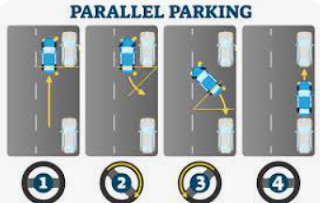
Parallel Parking:  Understand the different types of parking (parallel, perpendicular, angled) and practice each. Parallel parking is a parking technique where a vehicle is parked parallel to the curb or edge of the road. It typically involves positioning the vehicle into a space between two parked vehicles and aligning the vehicle's front or rear end with the vehicles parked in front and behind. This method of parking is commonly used in urban areas where parking space is limited and often requires skillful positioning to fit the vehicle into the available space. Here's a step-by-step guide to parallel parking: Find a space: Look for a parking space that is large enough to accommodate your vehicle. Signal and position: Use your turn signal to indicate your intention to park. Position your car parallel to the car in front of the empty parking space, leaving about 1 meter (3 feet) of space between your car and theirs. Make sure to align your car's rear bumper with the rear...

Important Steps for Driving Practical Test

Image
Vehicle Control During the Practical Test Steering Control: During the driving test in Abu Dhabi, candidates need to show that they can steer the car correctly. This means keeping the car in the correct lane and making turns smoothly and correctly. It's like staying in your lane when you're driving straight and making turns without moving into other lanes. Being able to do this shows that you have good control of the car and can drive safely on the roads. Acceleration and Deceleration:   Going Faster and Slowing Down. Acceleration: This is when you press the acceleration pedal to make the car go faster. Candidates need to do this smoothly, without sudden jerks or lurches. Deceleration: This is when you slow down or stop the car by gently pressing the brake pedal. Candidates must slow down smoothly and safely when necessary, such as approaching a traffic signal or other hazard on the road.    Gear Shifting: Changing Gears in Manual Transmission Vehicles Proper gear shif...

Various Topics for the Theory Test in Abu Dhabi

Image
Here are some of the key topics typically included in the theory test: Traffic Signs and Signals: Knowledge of various traffic signs, signals, and road markings is essential for safe driving. Road signs indicate speed limits, intersections, and hazards such as curves or slippery roads. Traffic signals regulate intersections, indicating when to stop, yield, or proceed. Road markings, such as lane dividers and crosswalks, guide drivers safely.  Rules of the Road: Understanding the basic rules of the road is important for safe and responsible driving. This includes understanding various regulations such as speed limits, which indicate the maximum allowable speed on different types of roads to ensure safe driving conditions and reduce the risk of accidents. Right-of-way rules indicate who has priority in specific traffic situations, such as at intersections or when merging lanes, to prevent conflicts and ensure smooth traffic flow. Overtaking regulations provide guidelines on when an...